
How Many Units In Duolingo Spanish And What To Expect

Contents
- Key Takeaways
- How Many Units in Duolingo Spanish?
- Current Total Unit Count
- Recent Updates to Unit Structure
- Unit Distribution Across Sections
- Duolingo Spanish Course Structure
- Sections and Their Themes
- Progression from Beginner to Advanced
- Lesson and Level Breakdown
- What Each Unit Covers in Duolingo Spanish
- Vocabulary and Grammar Focus
- Speaking and Listening Exercises
- Gamification and Learning Features
- Frequently Asked Questions
- What is the total number of lessons in the Duolingo Spanish course?
- How many levels are there in each unit of the Spanish program on Duolingo?
- Can you estimate the time commitment required to complete the Spanish course on Duolingo?
- Are there any advanced units available in the Duolingo Spanish course for fluent speakers?
- What is the structure of Duolingo’s Spanish course in terms of progressing from beginner to advanced?
- Does Duolingo offer a placement test to determine how many units you should skip in the Spanish course?
- Sources
Learning Spanish on Duolingo can feel like a big task, but knowing how the course is structured makes it easier to plan progress. The Spanish course for English speakers is split into sections, and each section holds a series of units.
Duolingo does not publish an official unit count, and the total changes when it updates the course. What Duolingo does publish is where each section lands on the CEFR scale: the end of Section 8 marks level B2.
Key Takeaways
- Duolingo publishes no fixed unit count for Spanish; check the section list in your app for the current total.
- Units progress from beginner to upper-intermediate levels in a structured path, ending at B2 after Section 8.
- Each unit focuses on vocabulary, grammar, and practice activities.
How Many Units in Duolingo Spanish?
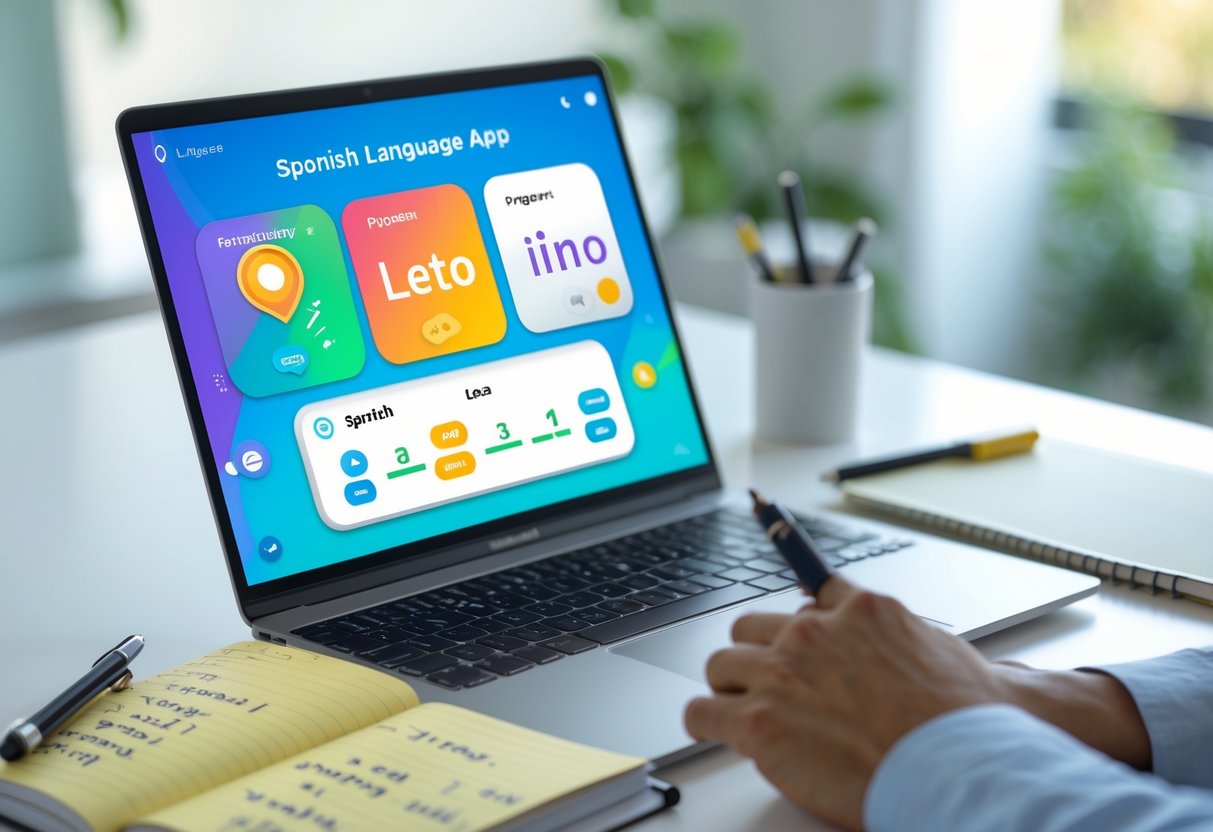
The Duolingo Spanish course includes many units grouped into sections that guide learners from beginner to upper-intermediate levels. The total number of units can change as Duolingo updates the course.
Current Total Unit Count
Third-party counts of the Spanish path usually land somewhere above 200 units, but they disagree with each other and go out of date. Duolingo itself doesn't list a number, so the most reliable count is the one in your own app.
Each unit focuses on a specific topic such as greetings, food, travel, or grammar. Units build in difficulty, introducing new vocabulary and grammar step by step.
Each unit includes several lessons, and each circle on the path is a level. You finish a unit by completing its levels.
Recent Updates to Unit Structure
Duolingo moved all learners from the skill tree to the learning path on November 1, 2022. The path organizes content into a clear sequence of units.
With the path, crowns were removed as a progress tracker. Your position on the path shows your progress instead, and each circle on the path equals one old crown level.
Duolingo continues to update its courses and says it may reposition learners on the path when content changes. That is why unit counts differ between learners and over time.
Unit Distribution Across Sections
Units are grouped into sections that represent different learning stages. Duolingo maps the sections of its Spanish course for English speakers to CEFR levels:
- End of Section 3: A1
- End of Section 4: A2
- End of Section 6: B1
- End of Section 8: B2
The number of units per section varies, and later sections tend to be longer than the first ones.
Duolingo Spanish Course Structure

The Duolingo Spanish course helps learners build vocabulary, grammar, and listening skills step by step. It organizes material by topic and by proficiency level on the CEFR (Common European Framework of Reference for Languages).
Sections and Their Themes
The course divides learning into sections, each covering a range of levels. Early sections teach basic greetings, common verbs, and everyday nouns. Later ones cover travel, work, culture, and more complex grammar.
Each section contains multiple units, which group lessons by topic. For example, one unit may focus on food vocabulary, while another introduces past tense verbs.
The structure moves learners from simple to more detailed content without skipping essential grammar.
Progression from Beginner to Advanced
Duolingo uses a path-based course structure that moves learners from A1 (beginner) to B2 (upper-intermediate) on the CEFR scale. Duolingo says its Spanish content now reaches B2, which ends at a Duolingo Score of 129.
Progress happens gradually. Each section introduces new sentence patterns and grammar rules while reviewing older material.
Later lessons include listening exercises, translation tasks, and speaking practice through speech recognition. These help build fluency and comprehension.
Lesson and Level Breakdown
Each unit contains several levels (the circles on the path), and each level is made of short lessons. Later levels add longer sentences, new verb tenses, and faster audio.
A typical lesson includes short exercises such as:
- Matching words to images
- Translating sentences
- Listening and typing what is heard
- Speaking aloud for pronunciation checks
You can revisit any completed level for review. Completing a unit's Legendary challenges earns Legendary status for that unit.
What Each Unit Covers in Duolingo Spanish

Each unit in Duolingo Spanish builds specific language skills through short, focused lessons. Learners practice vocabulary, grammar, and pronunciation while earning points through interactive exercises.
Vocabulary and Grammar Focus
Each unit introduces a set of new words grouped by topic, such as family, travel, or food. Learners review these words through matching, translation, and fill-in-the-blank tasks.
Grammar lessons teach sentence structure, verb conjugations, and gender agreement. For example, early units cover how to use ser and estar and how to form plural nouns.
Duolingo uses spaced repetition, a technique to help learners learn fast and remember vocabulary over time. Grammar rules appear in context, helping learners see how words change with tense or subject.
Speaking and Listening Exercises
Speaking and listening tasks train pronunciation and comprehension. Learners repeat phrases into their device’s microphone and get instant feedback.
Listening activities range from identifying spoken words to typing full sentences. Short clips test recognition of similar-sounding words.
These exercises develop practical skills needed for real conversations. Difficulty increases with faster speech and longer sentences.
Gamification and Learning Features
Duolingo’s gamification elements motivate consistent practice. Learners earn XP, keep streaks, and compete in leagues.
On the free plan, a hearts system limits mistakes; Super Duolingo offers unlimited hearts. Daily goals and leaderboards add friendly competition.
Units unlock gradually, giving a clear sense of progress. Reminders and progress bars help learners keep a daily habit.
Frequently Asked Questions

The Duolingo Spanish course includes many units that move from basic grammar to upper-intermediate conversation. Learners can track progress along the path and take placement tests to skip material they already know.
What is the total number of lessons in the Duolingo Spanish course?
Duolingo doesn't publish official totals for units or lessons, and both change as the course is updated. Your app's section overview shows the current units in each section.
How many levels are there in each unit of the Spanish program on Duolingo?
It varies by unit. Each circle on the path is a level, and you complete a unit by finishing all of its levels.
Can you estimate the time commitment required to complete the Spanish course on Duolingo?
It depends on how much you study. In a Duolingo study of Spanish learners, those who finished the A2 content scored about the same on reading and listening as students with four semesters of university Spanish.
Are there any advanced units available in the Duolingo Spanish course for fluent speakers?
Yes. The later sections reach B2, with more complex grammar and longer texts. Duolingo does not yet offer C1 or C2 content.
What is the structure of Duolingo’s Spanish course in terms of progressing from beginner to advanced?
The course starts with basic words and phrases, then moves to verbs, tenses, and sentence formation. Higher units focus on conversation, reading comprehension, and cultural topics.
Does Duolingo offer a placement test to determine how many units you should skip in the Spanish course?
Yes. Duolingo offers a placement test when you start a course. Based on the results, it places you further along the path so you can skip early material you already know.
Sources
- How long does it take to learn Spanish, French, and other languages?, Duolingo Blog
- Duolingo's new learning path, Duolingo Blog
- Duolingo course content can take you to B2 proficiency, Duolingo Blog
- Research shows Duolingo teaches 5+ university semesters, Duolingo Blog