At a constant velocity, a 5kg bag of cement is pulled straight up a 7m wall. How much work is done by the puller? (Gravitational pull is 9.8m/s2, W(J)=F(N)*D(m)
I put a Pop-Tart in the toaster. Electrical energy is transformed to thermal energy to make my Pop-Tart hot. Based on the Law of Conservation of Energy, once my Pop-Tart starts to cool, is energy lost?
A. Yes. All the energy was used in the conversion of energy. B. No. Energy cannot be created or destroyed. C. Yes. The Pop-Tart is no longer hot. D. No. Energy can be created, but it cannot be destroyed.
Which of the following depictions best represents evolution and why?
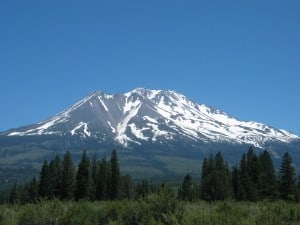
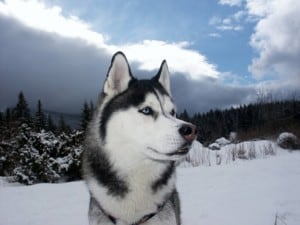
Formation of a mountain over timeA husky dog descended from a wolf
Which of the following depictions best represents evolution and why?
A. The formation of a mountain over time. The mountain changed and formed. It evolved. B. The husky dog. The dog is the product of modifications of inheritance over time.
B. The husky dog. The dog is the product of modifications of inheritance over time.
Researchers want to conduct a study using random sampling. What is random sampling?
A. Individuals are randomly selected from the population. Every individual has the same probability of being selected. B. A control group is selected and every other individual is used for data. C. The population is divided into subgroups. Each subgroup has several individuals that are selected. D. The population is divided into age groups and individuals are chosen at random from within those age groups.
A. Individuals are randomly selected from the population. Every individual has the same probability of being selected.
A fish swims through the water by using its fins to push water backwards. Pushing water backwards propels the fish forward through the water. This most nearly fits which of Newton’s Laws?
A. Newton’s First Law: Force=mass(acceleration) B. Newton’s Second Law: objects in motion will stay in motion unless acted upon by a force, objects at rest will stay at rest unless acted upon by a force C. Newton’s Third Law: For every action, there is an equal and opposite reaction.
C. Newton’s Third Law: For every action, there is an equal and opposite reaction.
Cindy wants to figure out if daisies grow faster in cold weather or in hot weather. She puts one daisy in the fridge and one outside in the sun. What is the problem with Cindy’s experiment?
A. There are too many uncontrolled variables. B. There are no problems. C. There is no independent variable. D. There is no dependent variable.
Your body turns food into sugar by an initial chemical reaction from chemicals in your:
Read the following passage:
It all starts with that first bite of pizza. Your teeth tear off that big piece of crust. Your saliva glands start spewing out spit like fountains. Your molars grind your pizza crust, pepperoni, and cheese into a big wet ball. Chemicals in your saliva start chemical reactions. Seemingly like magic, starch in your pizza crust begins to turn to sugar! A couple of more chews and, then, your tongue pushes the ball of chewed food to the back of your throat. A trap door opens, and there it goes, down your gullet!
Your Digestive System. (2012). Discovery Kids. Retrieved October 9, 2013, from http://kids.discovery.com/tell-me/science/body-systems/your-digestive-system
Your body turns food into sugar by an initial chemical reaction from chemicals in your:
A. Gullet B. Saliva C. Molars D. None of the above. There is no chemical reaction.
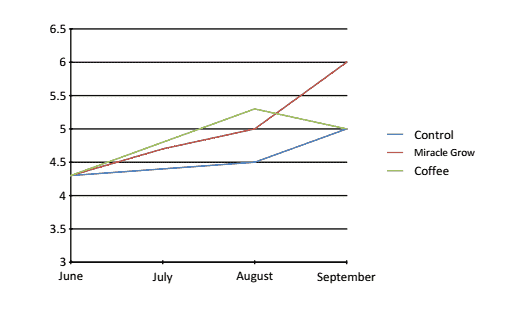
In this experiment, three of the same type of plants were grown in identical circumstances. The only factors that changed were that one plant was given coffee, one Miracle grow, and the other nothing (control). The plants were then measured each month to see how tall they were in inches.
What does the outcome of the previous questions experiment tell you?
A. The plant grows faster with coffee. B. The plant grows taller with nothing. C. The plant grows taller with Miracle Grow. D. The plant grows faster with Miracle Grow.
In this experiment, three of the same type of plants were grown in identical circumstances. The only factors that changed were that one plant was given coffee, one Miracle grow, and the other nothing (control). The plants were then measured each month to see how tall they were in inches.
What was the purpose of the experiment?
A. To see how much fruit each plant would grow. B. To see whether coffee or Miracle Grow would make the plant grow taller. C. To see how the weather in each month changed the growth of the plants. D. None of the above.
B. To see whether coffee or Miracle Grow would make the plant grow taller.
In this experiment, three of the same type of plants were grown in identical circumstances. The only factors that changed were that one plant was given coffee, one Miracle grow, and the other nothing (control). The plants were then measured each month to see how tall they were in inches.
What are the independent and dependent variables of the previous questions experiment?
A. Independent variable: adding coffee and/or Miracle Grow. Dependent variable: the height of the plant. B. Independent variable: the height of the plant. Dependent variable: adding coffee and/or Miracle Grow. C. Independent variable: the moths of the year. Dependent variable: the three plants. D. Independent variable: the three plants. Dependent variable: the months of the year.
A. Independent variable: adding coffee and/or Miracle Grow. Dependent variable: the height of the plant.
The water cycle involves the exchange of energy, which leads to temperature changes. For instance, when water evaporates, it takes up energy from its surroundings and cools the environment. When it condenses, it releases energy and warms the environment. These heat exchanges influence climate. The evaporative phase of the cycle purifies water which then replenishes the land with freshwater. The flow of liquid water and ice transports minerals across the globe. It is also involved in reshaping the geological features of the Earth, through processes including erosion and sedimentation. The water cycle is also essential for the maintenance of most life and ecosystems on the planet.
The water cycle is responsible for:
A. Erosion B. Evaporation C. Transporting minerals D. Maintenance of life and ecosystems E. All of the above
There is risk of damaging the carbon cycle (Global Warming), by:
Read the following passage from KidsGeo.com regarding the Carbon Cycle:
“…This important balance [of carbon] has been altered significantly in the past century as humans have begun using fossil fuels to produce energy. By burning the Earth’s store of carbon, mankind is able to create the energy needed to operate our communities. However, we must be careful as we do so. By releasing more carbon into the atmosphere than is being locked up, we risk causing damage to the delicate carbon cycle.”
The Carbon Cycle. (2013). Geography for kids, The study of our Earth. Retrieved October 17, 2013, from http://www.kidsgeo.com/geography-for-kids/0146-ocean-tides.php
There is risk of damaging the carbon cycle (Global Warming), by:
A. Getting energy to operate our communities B. Releasing more carbon into the atmosphere C. Producing energy D. Digging up fossil fuels
An eclipse is an astronomical event that occurs when an astronomical object is temporarily obscured, either by passing into the shadow of another body or by having another body pass between it and the viewer.
Which of the following best describes an eclipse?
A. When the moon passes between the sun and the Earth B. When a comet soars through the sky C. When a plane leaves a shadow on the ground D. When the sun passes between the Earth and the moon
A. When the moon passes between the sun and the Earth
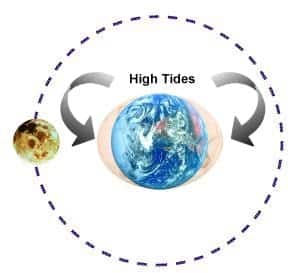
Tides By far the most important factor affecting the movement of water across the ocean is the tides. Tides are great bulges of water caused by the gravity of the Moon and Sun. Attracted by gravity, these bulges move around the Earth’s oceans, causing water levels to rise and fall. Typically water will rise for about six hours, followed by six hours of falling water depths.
Tides. (2013). Geography for kids, The study of our Earth. Retrieved October 17, 2013, from http://www.kidsgeo.com/geography-for-kids/0146-ocean-tides.php
Tides are caused by:
A. Solar energy B. Water bulging C. The pull of gravity D. Movement of water over six hours