
GED Social Studies: 5 Important People of the Revolutionary War

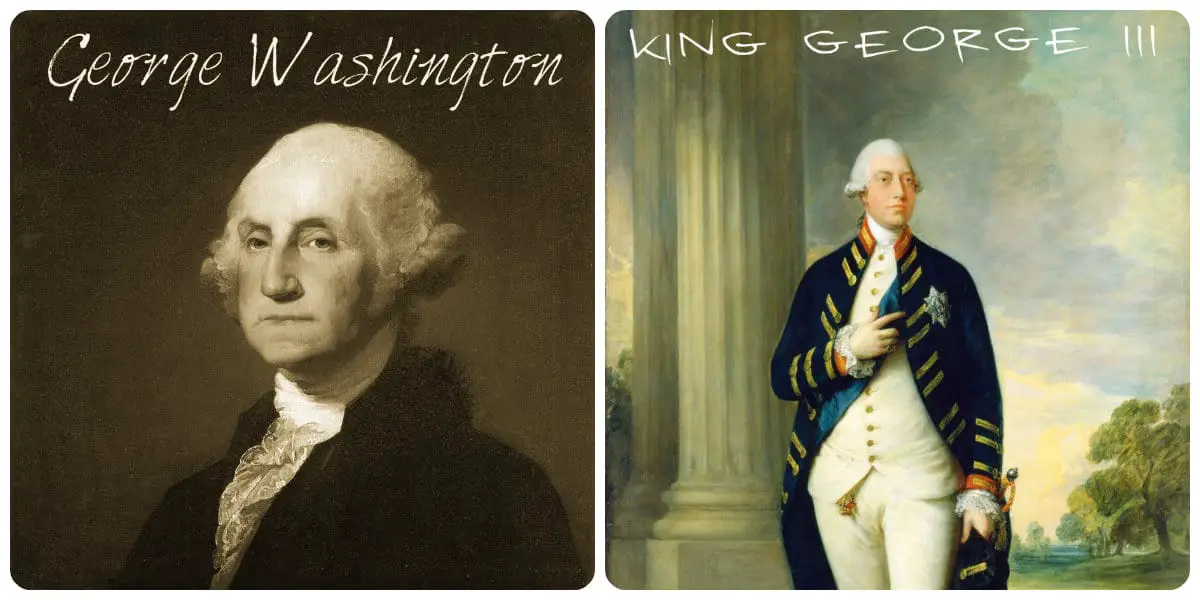
Let’s talk about the Revolutionary War today. And let’s break this war down by the main players in it.
When we talk about the Revolutionary War, it’s important to recognize that there were two sides, or let’s call them “teams,” fighting against one another. The first team is the American Patriots, whose main army was the Continental Army. This team was made up of colonists fighting for independence from Great Britain, the Mother Country.
The coach (or Commander-in-Chief) of the Continental Army was George Washington, who later became the very first President of the United States.
We have Free GED Social Studies Practice Test HERE
The other team is Great Britain, whose British Army was joined by the Loyalists. Loyalists were colonists who, just as their name implies, stayed loyal to the king.
The British monarch at this time was King George III. The Declaration of Independence blamed him for “repeated injuries and usurpations,” including “imposing Taxes on us without our Consent,” although the tax laws themselves were passed by Parliament.
These two men are the main leaders in the Revolutionary War. But they aren’t doing this thing alone, so let’s talk about three more important players in the Revolutionary War….
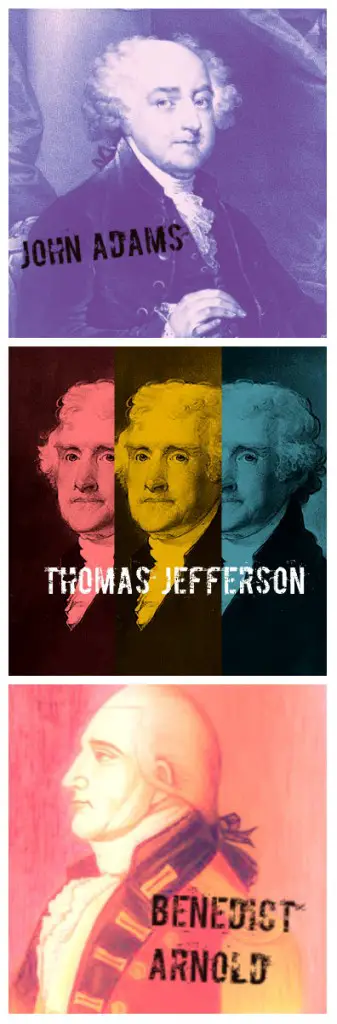
Now, John Adams is important to the Revolutionary War because he served on the five-member committee that prepared the Declaration of Independence. He later became the second President of the United States.
But Adams didn’t write the Declaration. Thomas Jefferson drafted it, and Adams and Benjamin Franklin suggested only a few changes before it went to Congress. Thomas Jefferson is known for being the very first Secretary of State, as appointed by George Washington. He then went on to become the third President of the United States of America.
The last person in the photo frame above is Benedict Arnold. You should know that Ol’ Ben was a tricky character in the Revolutionary War. He began as one of the Continental Army’s best generals: he helped capture Fort Ticonderoga in 1775 and was wounded at Saratoga in 1777.
Then he switched sides. In 1780 he plotted to hand the American fort at West Point to the British. When the plot failed, he fled and became a brigadier general in the British Army. You can imagine the Patriots weren’t too happy with him. In history books, they talk a lot about Arnold by using the word “traitor” and discussing the meaning of “treason”. These are things you can look into if you’re looking for extra information.
Learn more about GED Social Studies Classes Online
Certainly, these players aren’t the only important people from the Revolutionary War, but they are a great launching point as you begin studying this portion of American history.
Have fun as your trip back into the Revolutionary War begins. Try to look at it as a story and not become overwhelmed by dates. And remember, the Patriots won, and the United States became an independent nation.
Related Topics:
- GED Social Studies Practice Lessons
- GED Science Study Guide
- GED Social Studies Prep Guide
- GED Reasoning through Language Arts Guide
- 6 Quick Tips to Prepare for the GED Science Test
- 3 Common Reasons Why Test-takers Fail GED
- How to Fail-Proof Your GED Math Test
- Why GED Practice Tests – 3 Reasons You Should Take GED Practice Test Now
- 4 Things You Can Do After Passing the GED
Watch our Online GED Math Videos covering all topics you will face during the GED Math test
Sources
- Declaration of Independence: A History, National Archives
- Declaration of Independence: A Transcription, National Archives
- Benedict Arnold, National Park Service